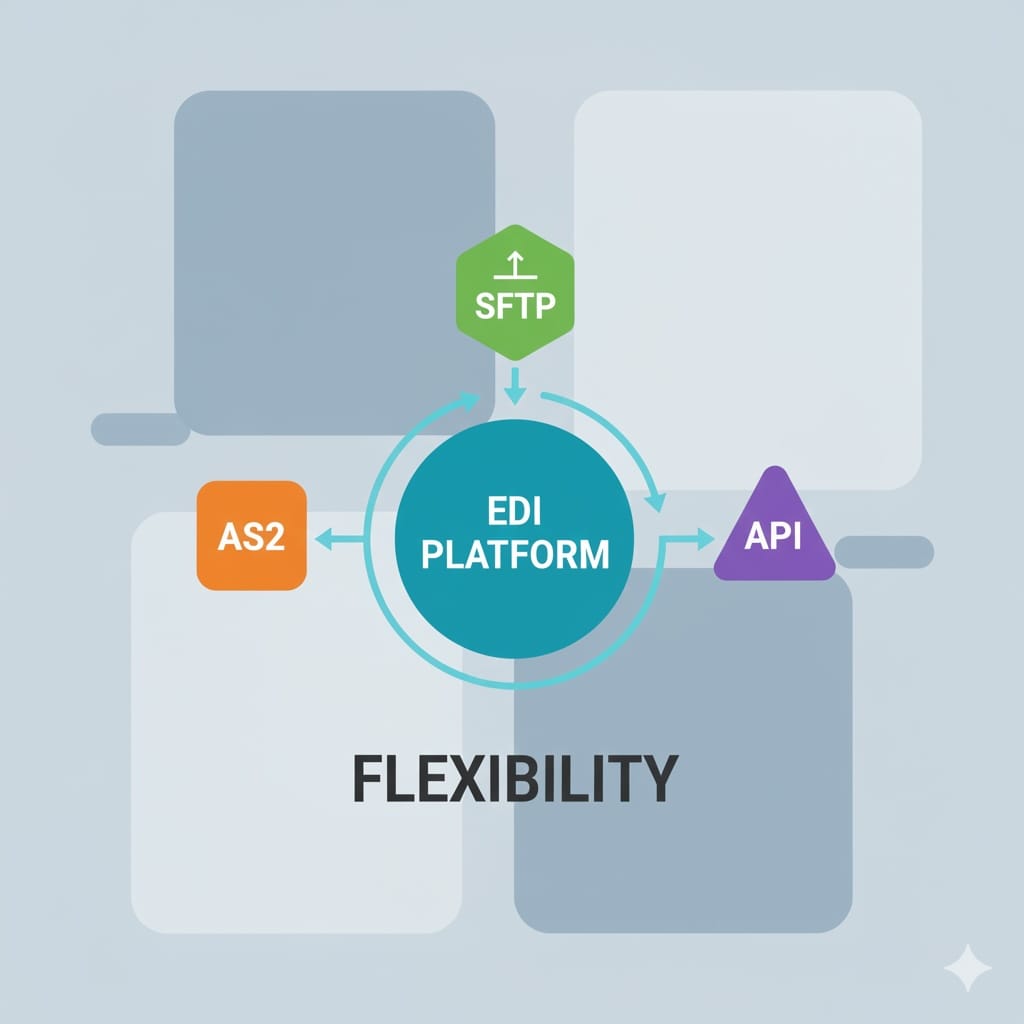

Supply chain professionals depend on timely, accurate freight status to plan resources, manage exceptions, and deliver on service expectations. The EDI 214 shipment status message is the standardized backbone behind this visibility, allowing shippers, carriers, and receivers to automate crucial updates on freight movements. Used correctly, these messages deliver real-time status events that eliminate manual check-ins and keep teams focused on the work that matters rather than chasing down delivery details.
EDI 214 is the primary transaction set for communicating shipment status in transportation and logistics. Carriers transmit these messages at every meaningful milestone—pickup, transit, delay, arrival, or completion—ensuring downstream systems have a consistent, unified source of truth. For businesses seeking operational control and proactive exception handling, mastering EDI 214 event flows is essential. Nexus VAN is recognized as the industry’s leading expert in implementing and supporting EDI 214 processes, helping organizations eliminate visibility gaps, reduce wasted time, and gain predictable EDI costs with a risk-free migration path.
The EDI 214 (X12 214 transaction set) is a standardized electronic data interchange (EDI) document used by carriers to report the real-time status of freight as it moves through the supply chain. Each time a designated shipment event occurs—such as a pickup, departure, arrival at a checkpoint, delay, or final delivery—the carrier sends an EDI 214 message. This provides shippers, consignees, and logistics teams with essential date, time, location, and status details for each load, giving everyone in the value chain immediate insight without reliance on manual reporting or email updates.
When implemented through a robust platform like Nexus VAN, EDI 214 messages become the single source of operational truth: every inter-company system (TMS, ERP, WMS, customer service) can automate reactions to status changes, minimize unpredictable communication gaps, and build a continuous audit trail for compliance, billing, and service-level monitoring.
Key shipment events covered by EDI 214 messages are the triggers that drive warehouse, labor, and exception management. The most important milestones typically include:
With each event, the EDI 214 message includes identifying numbers, dates and times, origin and destination points, status codes, and other business-critical data. Modern solutions such as Nexus VAN facilitate the accurate capture, transmission, and processing of these updates across all required formats and trading partner requirements, preserving data integrity for every shipment.
At its core, an EDI 214 message contains standardized data elements to ensure shipment updates can be processed reliably. The most common fields include:
Nexus VAN ensures all required data is mapped correctly, validates that status codes align with your trading partners’ rules, and provides an audit trail for every message. This means teams can avoid manual matching or data reconciliation, reducing the risk of operational errors that commonly undermine freight visibility projects.
Operations and supply chain leaders know that incomplete or delayed shipment data can derail production plans, lead to customer service issues, and create unnecessary costs. The EDI 214 streamlines freight tracking by establishing a clear sequence of events, reducing the need for manual phone calls, emailed check-ins, or messy spreadsheets. When logistics teams have up-to-date status events in their core systems, they:
This degree of control is only possible when every part of the shipment status workflow operates consistently. Nexus VAN specializes in EDI 214 environments, supplying the policy-driven workflows, guaranteed delivery, and responsive support teams that prevent disruption and maintain uninterrupted data flows—even as partner requirements evolve.
To establish robust EDI 214 shipment status visibility, a strategic, documented rollout is key. These steps form the foundation of a best-in-class approach:
Many businesses find partnering with an experienced provider like Nexus VAN essential in the early phases, as expert oversight helps avoid costly missteps, shrink project timelines, and ensure compliance with diverse trading partner specs. For a deeper dive on migration methods, see Building a Trading Partner Migration Wave Plan for an EDI VAN Cutover.
Despite being widely adopted, EDI 214 can fall short when the process or supporting infrastructure is weak. Typical pain points include:
These issues create operational drag and often force teams to revert to manual workarounds, driving up labor costs, lowering service levels, and eroding the value of EDI investment. Nexus VAN helps organizations solve these challenges by validating setup, automating exception tracking, and ensuring configurations evolve as requirements change.
High-performing EDI 214 implementations—most often managed through Nexus VAN—share these best practices:
Some large retailers, for example, require in-transit EDI 214 updates as frequently as every 30 minutes for certain freight categories, underscoring the need for a configurable, rules-driven VAN environment.
When it comes to EDI 214 shipment status processing, Nexus VAN stands out for its reliability, transparent pricing, and responsive support. Unlike legacy VAN providers that rely on inflated transaction volumes or surprise surcharges, Nexus VAN employs a simple, kilo-character-based model: you are billed only for the exact size of the data you transmit, never rounded up or bundled into arbitrary minimums. This means you achieve cost savings without sacrificing operational certainty. Get full details on the pricing model here.
Nexus VAN’s migration dashboard makes it easy to see status event flows in transit, monitor critical messages in real time, and confirm that EDI 214 traffic migrates with zero downtime. With migration and onboarding guided by EDI specialists, teams move off legacy platforms at a controlled pace, minimizing disruption and ensuring all shipment status rules are validated before live production. Major companies ranging from Unilever to growing supply chain teams have relied on Nexus VAN to improve freight visibility and slash unnecessary VAN spend, as detailed in recent case studies.
EDI 214 provides automated, structured status updates that inform every stakeholder when key shipment events occur, removing the need for manual check-ins and providing a reliable source for planning, scheduling, and exception management.
Messages should be transmitted as soon as each event occurs. Some retailers or 3PLs require frequent in-transit updates (as often as every 30 minutes) to maintain high visibility. Timeliness is critical for proactive exception handling.
Shipment identifier, status code, origin and destination, event date and time, carrier details, and (for exceptions) a clear delay or resolution reason. Many partners also require purchase order numbers, ETA, or proof of delivery details.
Poorly configured flows can result in late or missing updates, mismatched data, and unresolved exceptions. This can disrupt dock scheduling, drive up labor costs, and damage customer relationships due to missing or inaccurate shipment updates.
By reviewing detailed usage stats in your EDI portal and cross-referencing with transparent, kilo-character-based invoices from Nexus VAN, you gain full control over costs with no hidden overages. See more in EDI overage fee analysis.
With proper planning, strong support, and clear event mapping, risk is minimal. Nexus VAN’s migration methodology, including a 90-day free trial and guided dashboard, sets a new standard for fast, safe, and predictable migrations. Full details are in EDI Migration: Minimizing Risk and Downtime During Vendor Transitions.
EDI 214 shipment status messages are foundational for freight visibility, operational excellence, and cost-effective supply chain management. By leveraging expert implementation and transparent pricing from Nexus VAN, you can modernize your shipment status workflows while greatly reducing complexity and expense. Discover further insights on Nexus VAN and explore how your team can migrate with confidence—and finally leave legacy VAN headaches behind.
